De/Angular Textiles by Sadaf Sadri
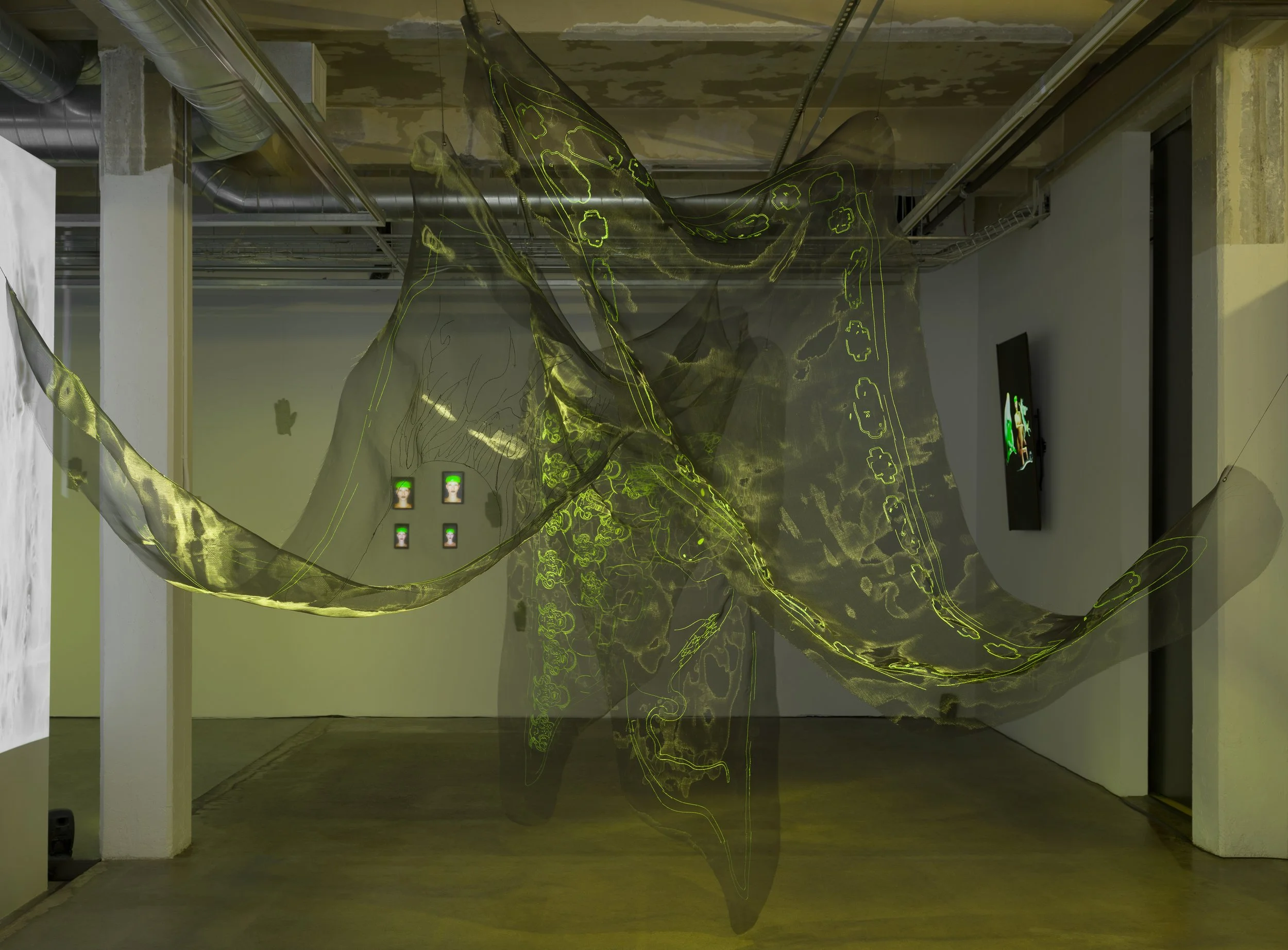
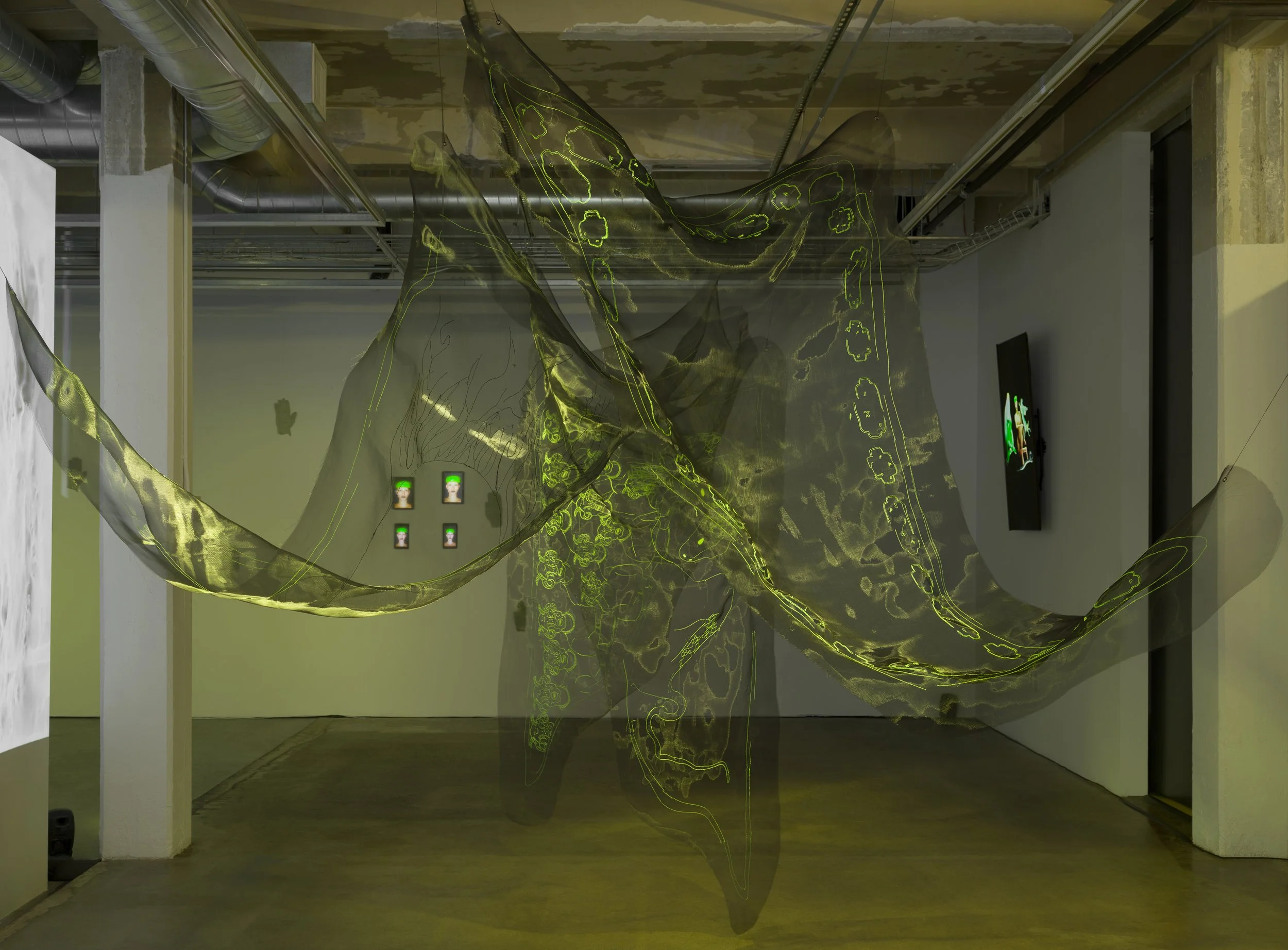
Sadaf Sadri, De/Angular 2026, Gallery 4Culture, Seattle, WA. Photo:Joe Freeman.
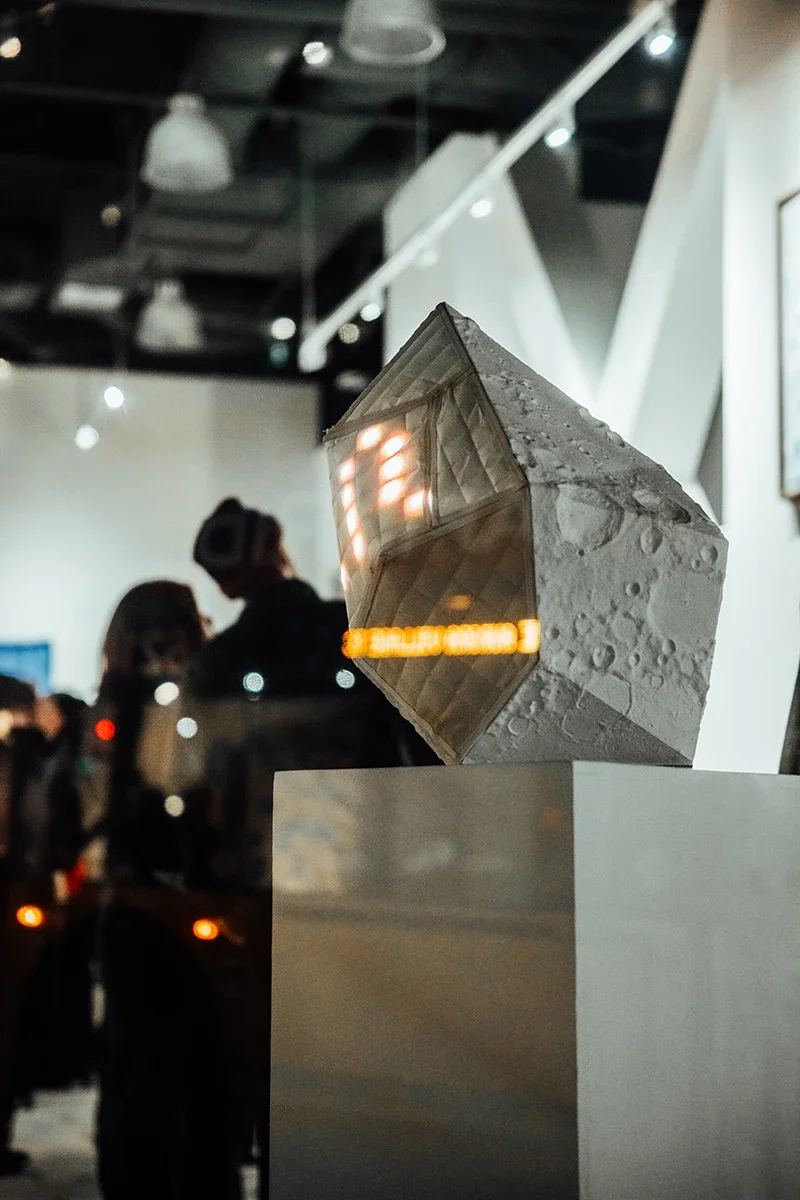
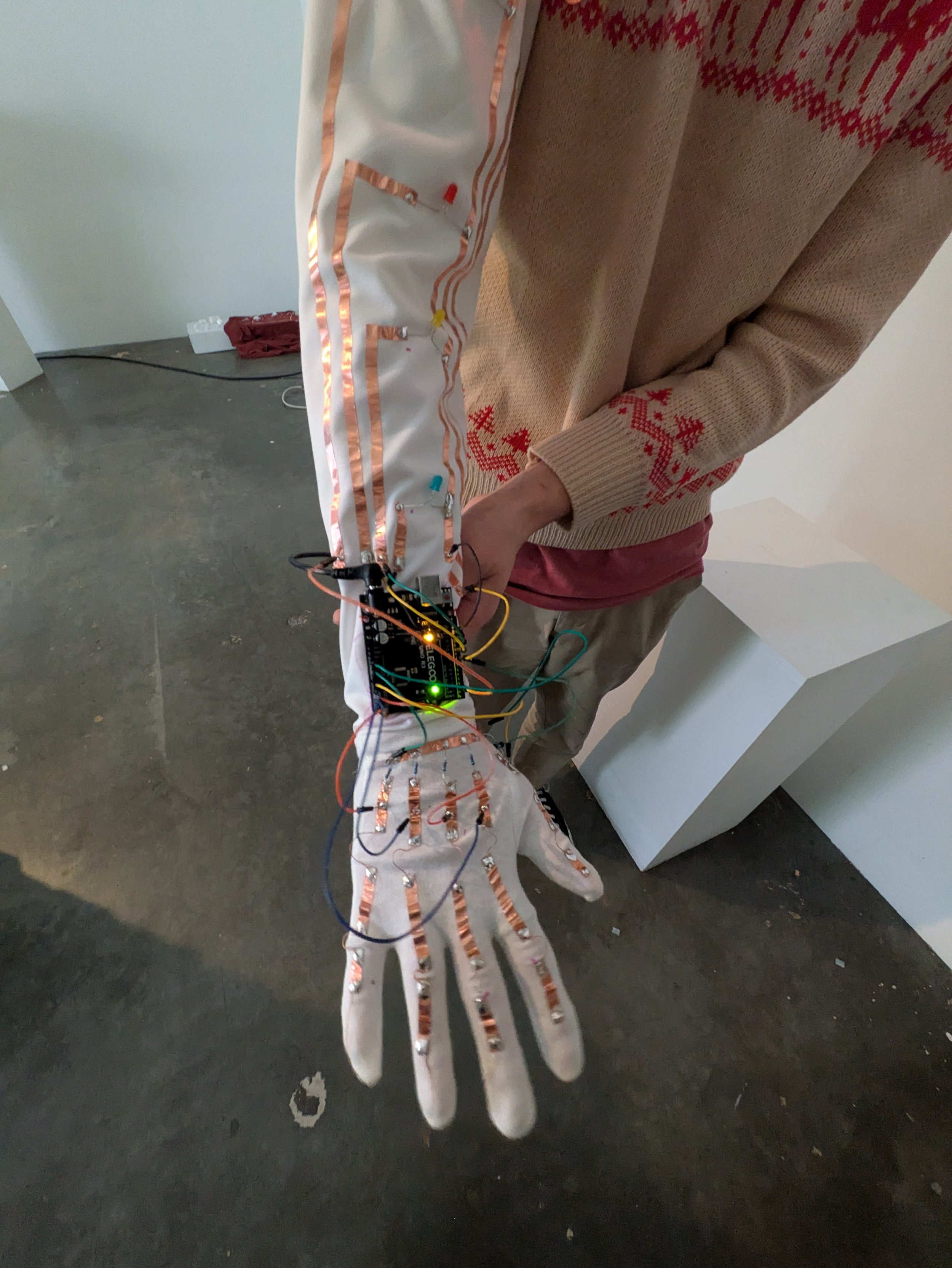
De/Angualr is Sadaf's dissertation exhibition which follows the framework they call De/Angular worlding in which they use the term hijacking in conversation with Muñoz' disidentification to imagine alternative queer worlds that emerge from hijacking Shi'i material culture. De/Angular uses traditional textile as well as electronic textiles to extend the 3D world to the tangible space of the exhibition. In De/Angular, Sadaf dissects the compositional and symbolic structure of Shi‘i iconography, which traditionally stages authority through carefully orchestrated visual hierarchies. Drawing from the visual language of Shi‘i ceremonial banners, they reconstruct their forms while disrupting their inherited systems of representation. Historically, such banners often center the figure or symbol of a sanctified authority, most commonly the lion associated with Imam Ali, surrounded by inscriptions invoking praise, victory, and divine legitimacy. Within these compositions, language, ornament, and figuration operate together to stabilize religious and political power. Rather than reproducing this structure, Sadaf approach it as a system to be dismantled and reprogrammed.
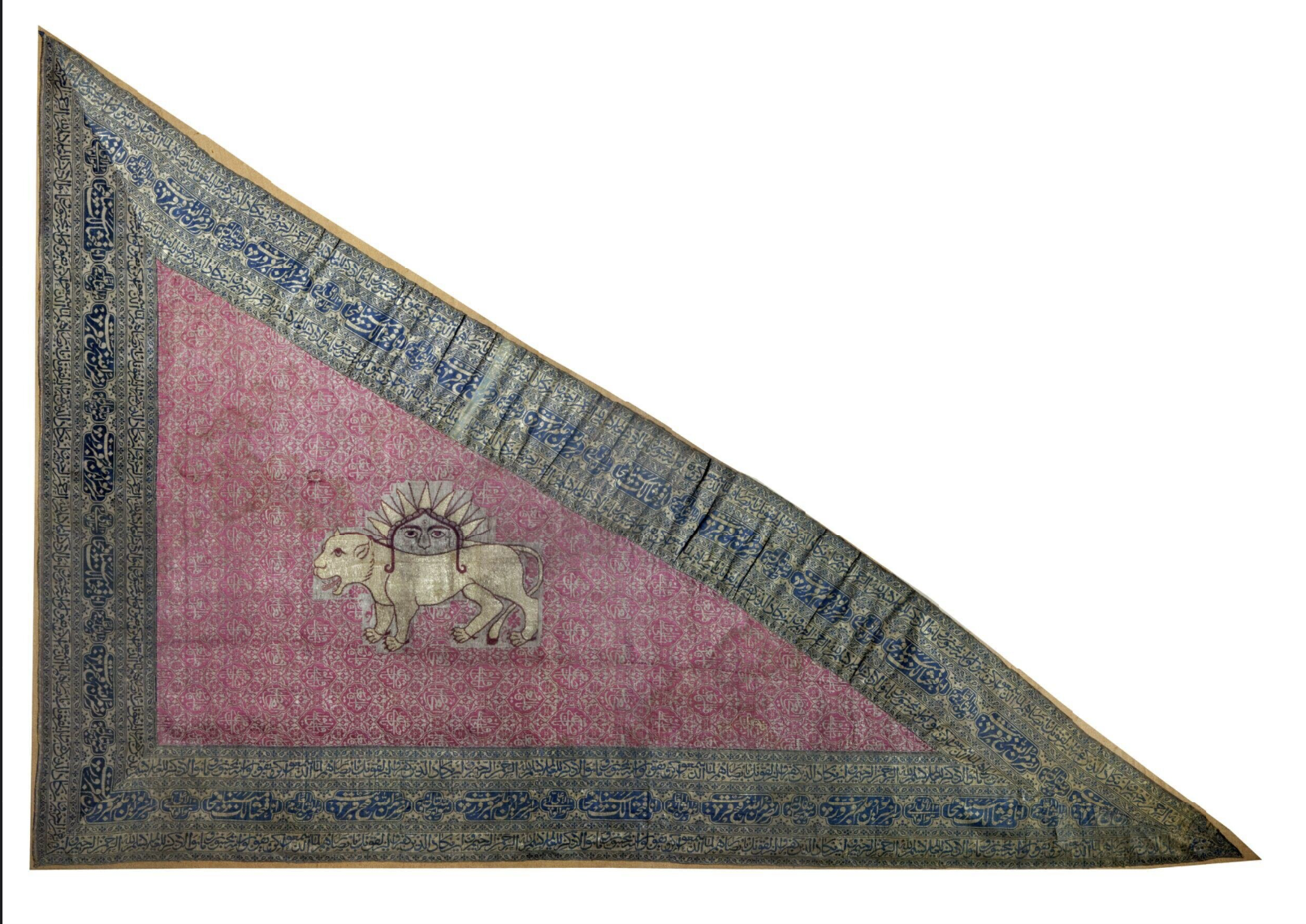
Triangular banner, brocaded silk and metal thread, Iran, Qajar period, 1800–1840, Victoria and Albert Museum.
Triangular banner, brocaded silk and metal thread, Iran, Qajar period, 1800–1840, Victoria and Albert Museum. According to the V&A Museum’s documentation the Qur’anic texts on the textiles read (“Banner” 2003): نصرٌ من الله وفتحٌ قريب Help from God and speedy victory إِنَّا فَتَحْنَا لَكَ فَتْحًا مُّبِينً Verily, We have granted you a signal victory هو الله تعالى سبحانه “He is God Most High, may He be praised هو الأعلى الولي He is God, Most High, may he be praised هو الفتاح العليم He is the Opener (of gates/sustenance), the All-Knowing
Drawing from Shi’i iconographic traditions, I fragment the banner into layered components, each subjected to a process of removal and substitution. Through this disassembly space is opened for insurgent forms.
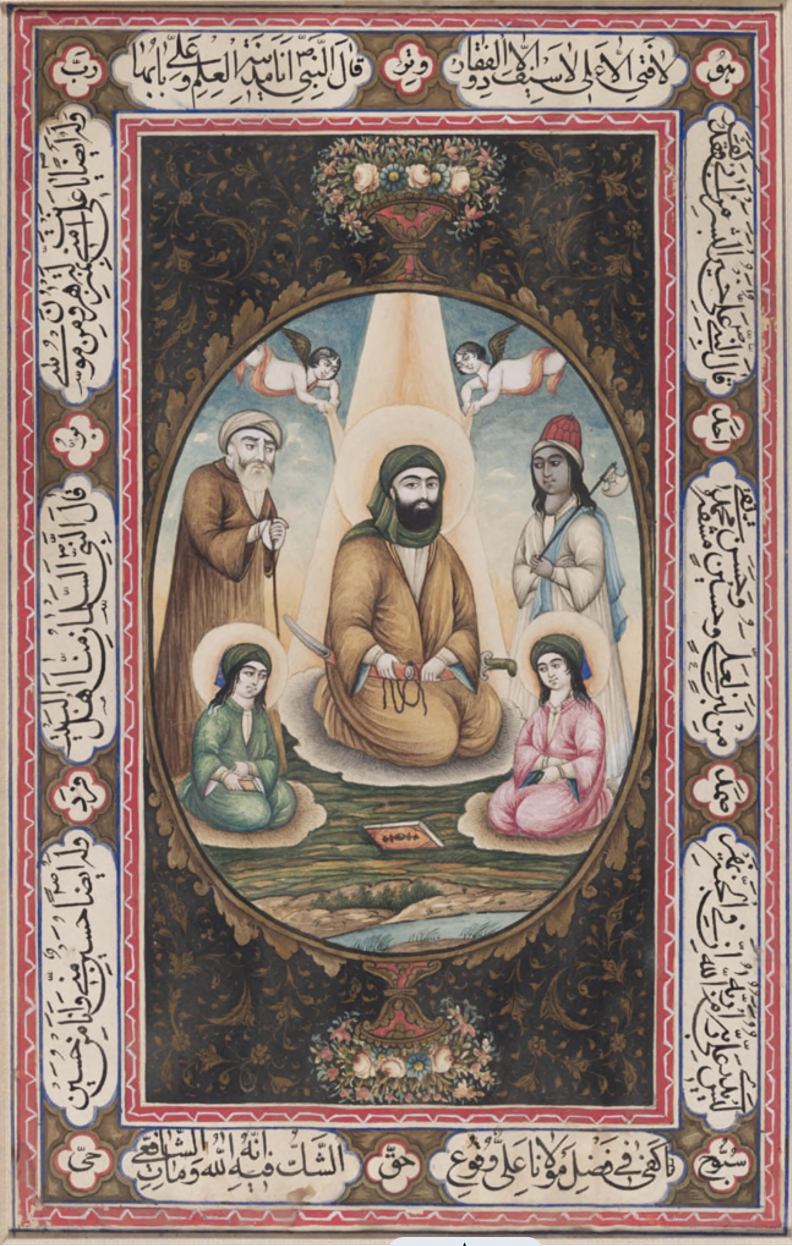
Imam 'Ali with Hasan and Husayn, Painting, 19th Century, Qajar Period, Harvard Art Museum.
Here, the perfect triangular shape of the banner and its uninterrupted border are ruptured, undoing their claim to coherence and containment, and opening a breach through which the subpar can intrude and reorganize the space from within. The first layer isolates the ornamental border of the banner and strips it of its textual content. What remains are diacritics, marks that once functioned as supplements to language, now suspended without their linguistic anchor. Detached from legibility, these marks become rhythmic, gestural traces that gesture toward communication beyond semantic clarity. In the absence of readable language, the border suggests other modes of coded exchange.
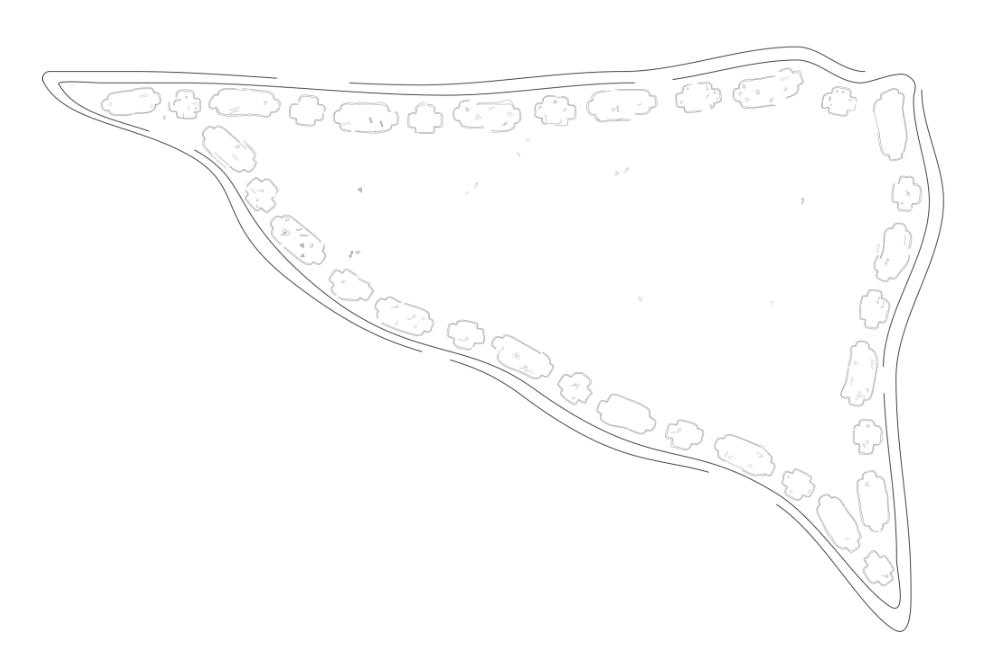
Sadaf Sadri, Textile Design, De/Angular, 2025 (First Layer)
The second layer reconfigures the architectural frame that typically houses the central ruling figure. Following Kemi Adeyemi’s investigations of angularity that I discussed before (Adeyemi 2019), rotated and displaced, the frame is denied its vertical orientation and upward thrust to interrupt its aspirational movement toward transcendence. This reorientation destabilizes the visual logic of elevation and reverence, collapsing the hierarchy that positions the figure as an object of devotion. The frame no longer supports authority; it becomes a site of disorientation and refuses to hold power in place.
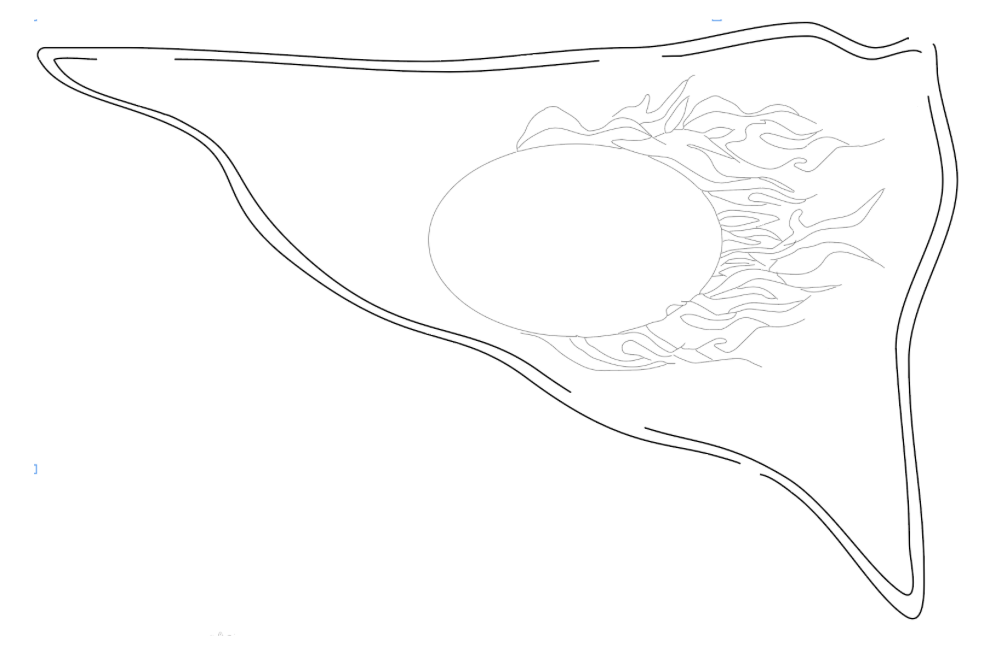
Sadaf Sadri, Textile Design, De/Angular, 2025 (Second Layer)
Within this disrupted structure, the third layer introduces the avatar who occupies the space traditionally reserved for the sanctified body. Occupying this space, the avatar does not seek to replace authority with another stable figure, but to trouble the very conditions under which such figures are produced. Emerging from my ongoing practice of speculative embodiment, the avatar operates as an unstable presence that represents multitudes of erased beings. A snake accompanies the avatar referring to the proverb مار در آستین پروراندن which prompts the avatar’s name as the viper in the bosom.
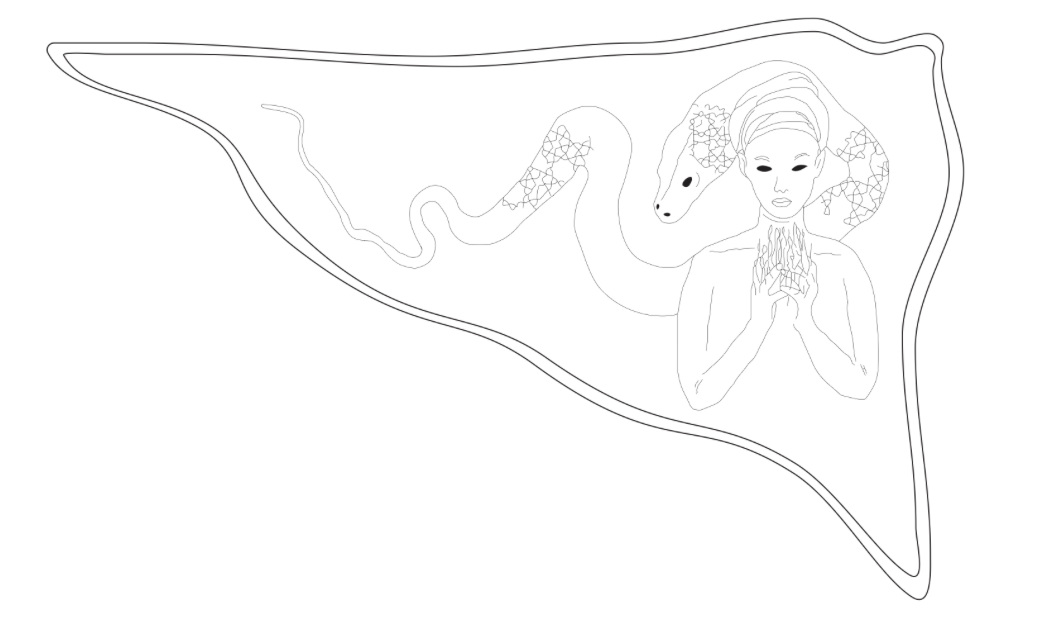
Sadaf Sadri, Textile Design, De/Angular, 2025 (Third Layer)
The final layer replaces the angelic figures often found in Shi’i visual culture with a figure borrowed from a spell from the book طلسمات طمطم هندي that is referred to as an occult manual. This figure, rooted in Islamic occult traditions, introduces a reconfiguration of forces. Unlike angelic figures, which often operate within Shi’i visual culture to stabilize sacred authority and divine order, this hybrid figure derives from a talismanic image associated with rituals of separation. Removed from its original linguistic and operative function, the figure no longer performs the magical task for which it was designed. Instead, detached from the efficacy of its textual invocations, it becomes a destabilized presence that disrupts the clarity of mediation and introduces a field of forces that cannot be fully contained within binaries such as sacred/profane or protective/dangerous.
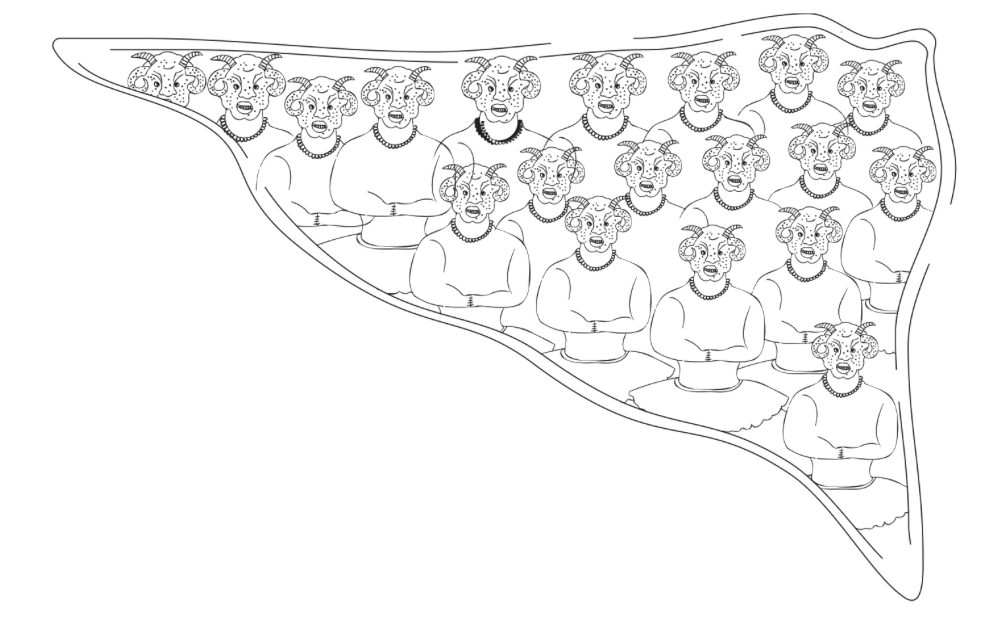
Sadaf Sadri, Textile Design, De/Angular, 2025 (Fourth Layer)