Postcards from the Moon by McKinley Smith
Double-click to edit...
/ / / / / / / /
/ / / / / / / /
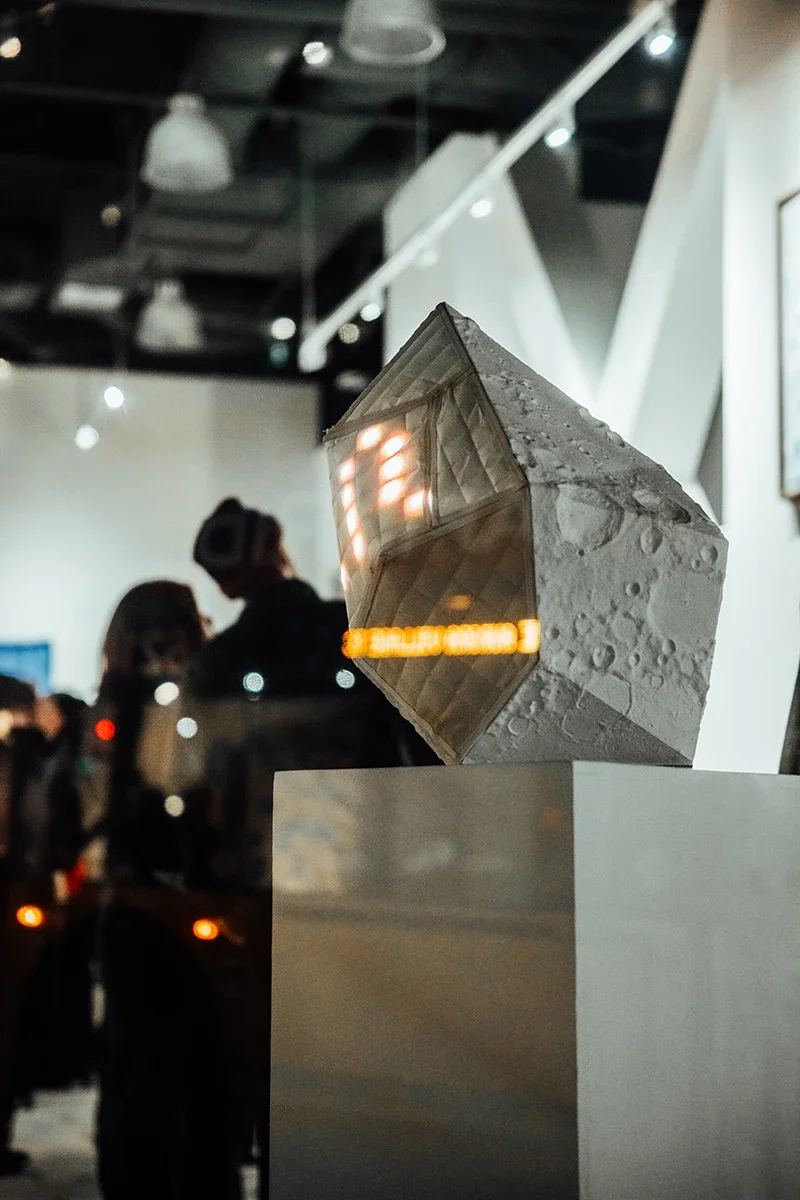
Thinking of You is the third work in the Postcards from the Moon series from TERRAMOTO—the creative practice of Seattle based artist and designer McKinley Smith. The project began as a material inquiry into the concept of soft screens and textile based displays through DXARTS. Early explorations also included experiments with thermochromic pigments and heat-producing circuits, but the final work trended toward an LED-based textile display due to material behavior.
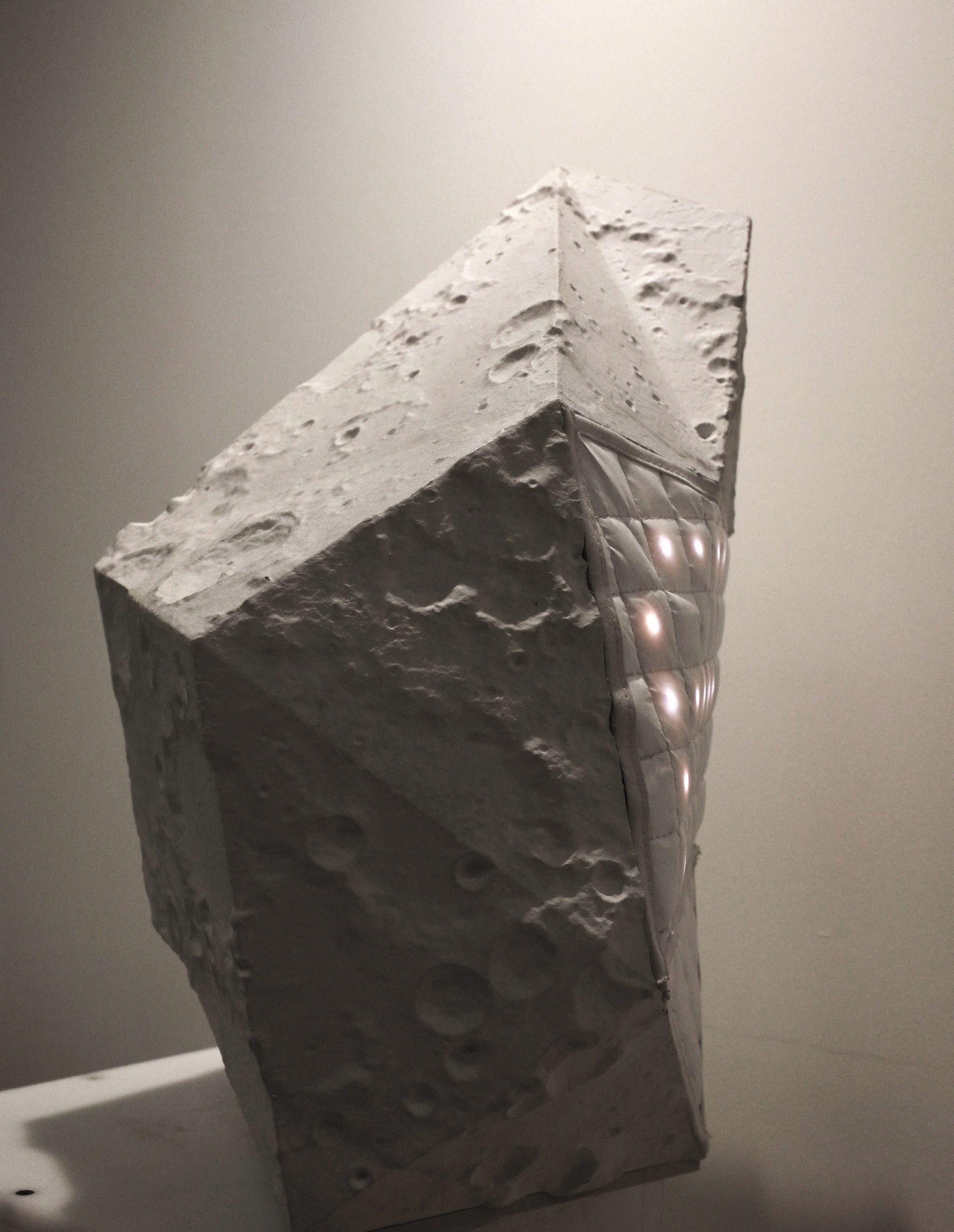
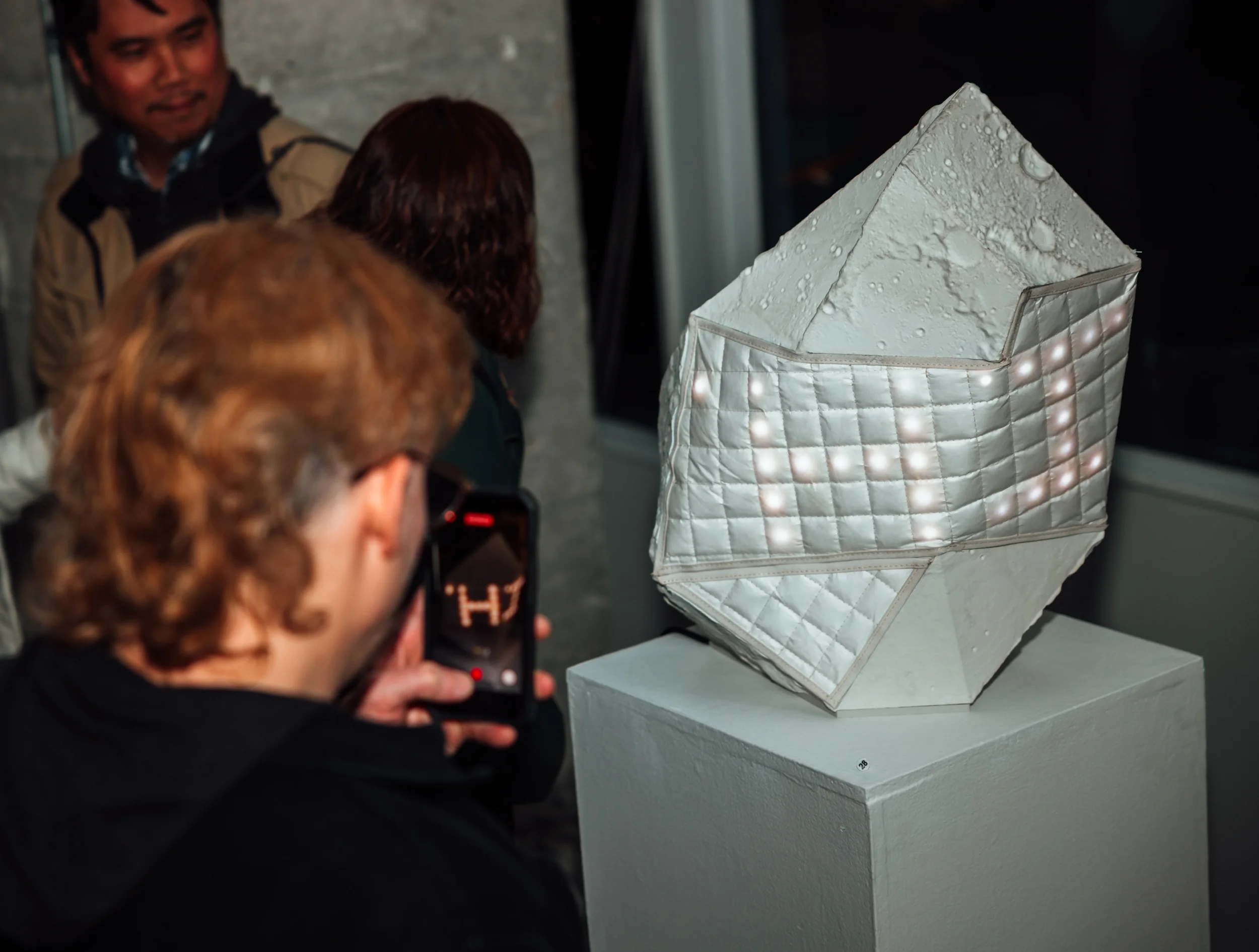
The object presents itself as a constructed chimeric lunar artifact. The majority of its faceted, low-polygon form is detailed with high-resolution surface mapping from NASA’a Lunar Reconnaissance Orbiter (LRO), creating a tension between the overall simplified geometry and the precise lunar surface data. The remaining surface takes shape as series of quilted panels inherent to Smith’s work. Hidden within that section, a hand-built LED matrix is sewn into the textile structure that converts quilted gridlines into a low resolution pixel display. When inactive, the electronics disappear into the quilting and the object holds its surface quietly. When active, the phrase “thinking of you” scrolls across from within the textile in a custom 5 x 5 dot-matrix typeface—like a soft marquee moving through the body of the artifact.
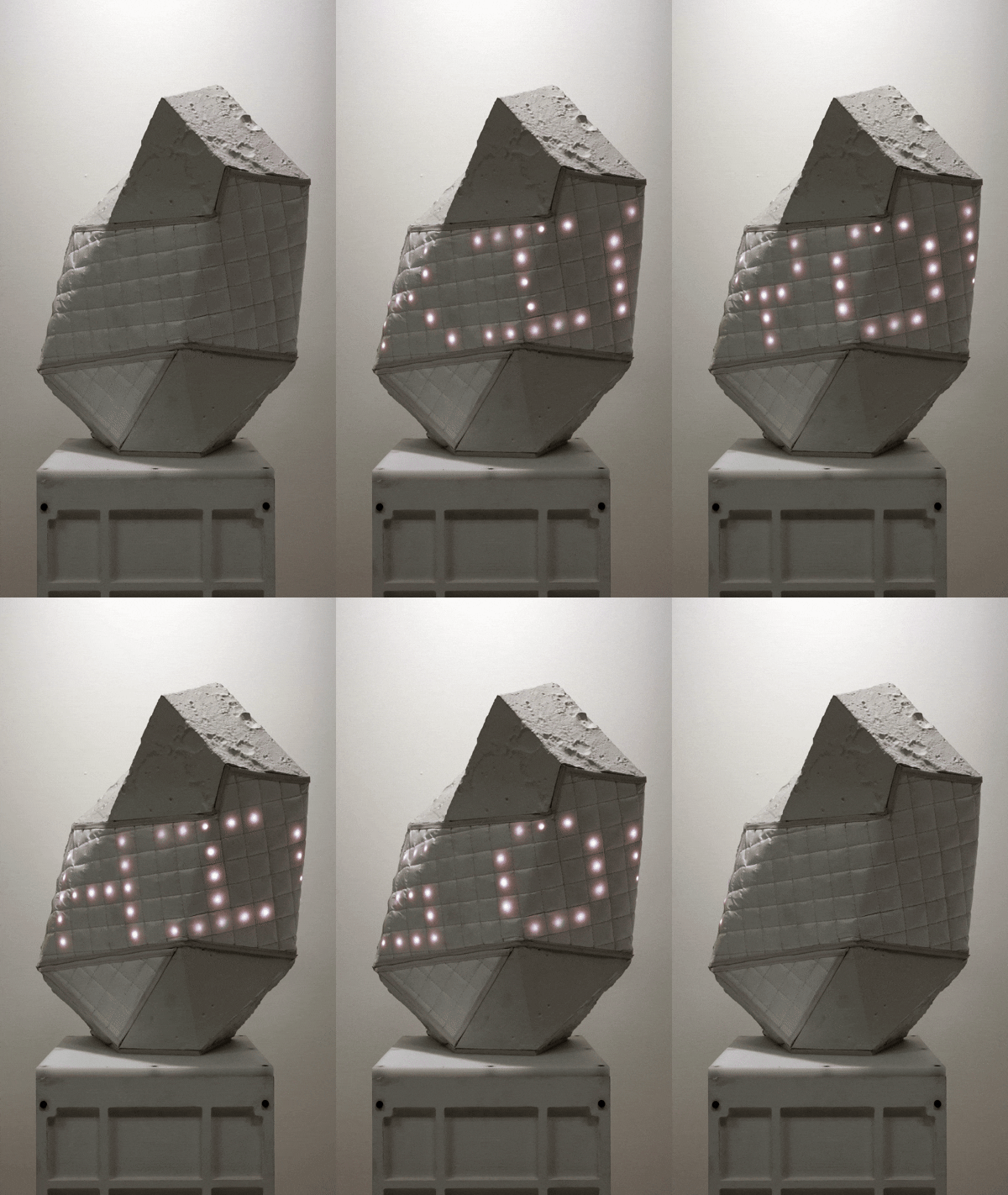
The message ‘Thinking of You’ scrolls beneath the surface of the quilt as it wraps the around the piece, inviting viewers to ponder the intent and the receptions of the message and what it’s broader connection to the Lunar artifact may be.
The phrase continues the language of earlier works in the series, including Wish You Were… and Hope You’re Well. These are familiar messages: casual, colloquial, almost generic. But that ordinary quality bestows them with an amorphous quality and room to shift. “Thinking of you” can be affectionate, lonely, romantic, procedural, depressive, cheerful, or painfully insufficient depending on who the viewer imagines sending it, receiving it, or waiting for it.
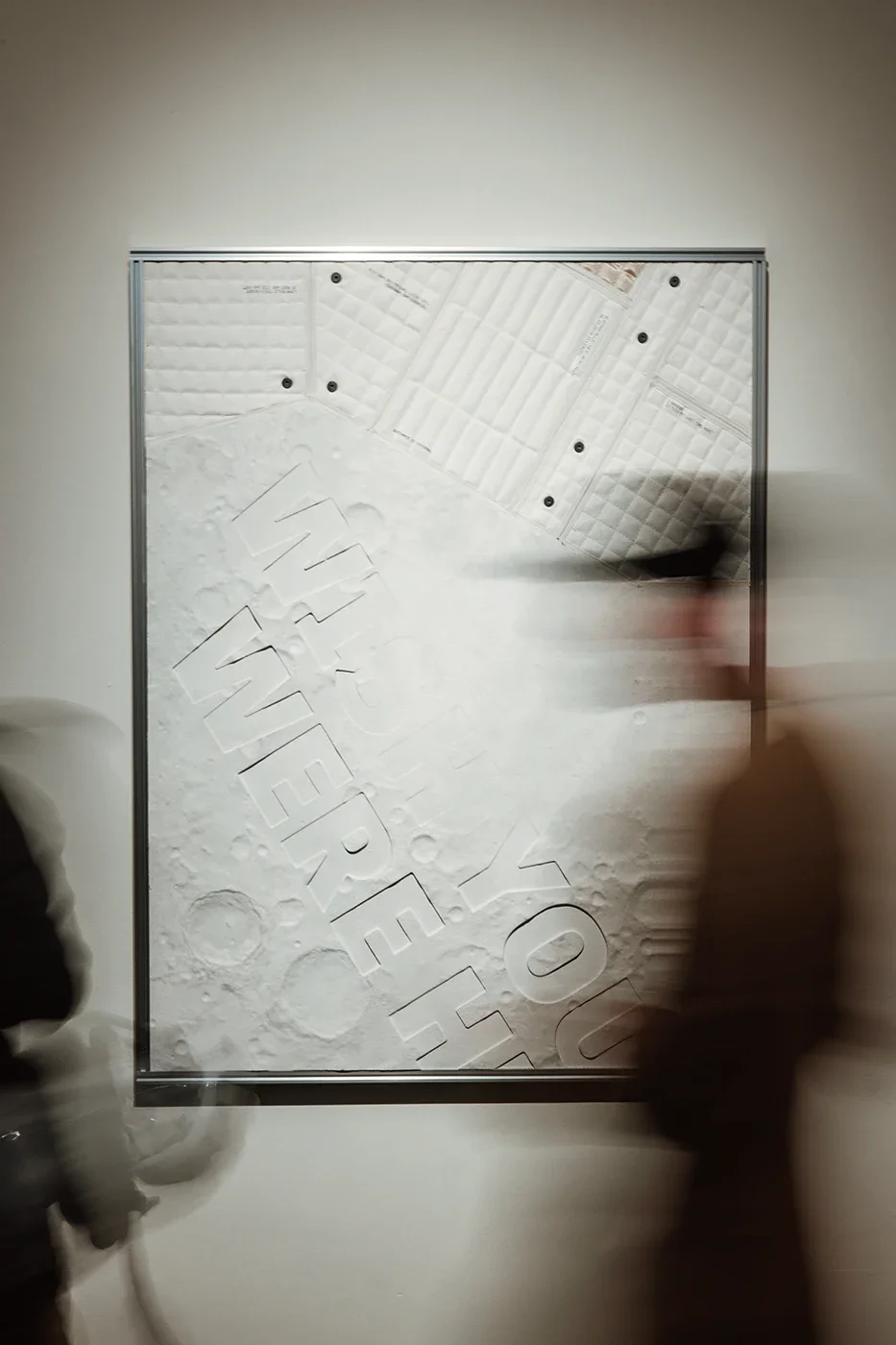
Smith’s first work in the series Wish you Were intentionally obscures the final word of the clipped phrase inviting viewers further interpretation and authorship of it’s message and it’s meaning.
The postcard reference in the series’s title comes from the strange place postcards occupy in personal communication options. While that are short and direct messages from and to individuals, they are also public-facing. The message carries intimacy, but it also carries exposure—it can be read by anyone who handles it. Thus it metered; personal, but not fully private.
That framework becomes a useful heuristic when thinking about communication between Earth and the Moon. A message sent between a lunar worker and someone on Earth would not only cross immense physical distance; it would move through infrastructure: relays, protocols, institutions, mission systems, employers, agencies, and archives. In that sense, the postcard becomes a model for communication that is intimate, delayed, mediated, and never entirely sealed off from the systems that carry it.
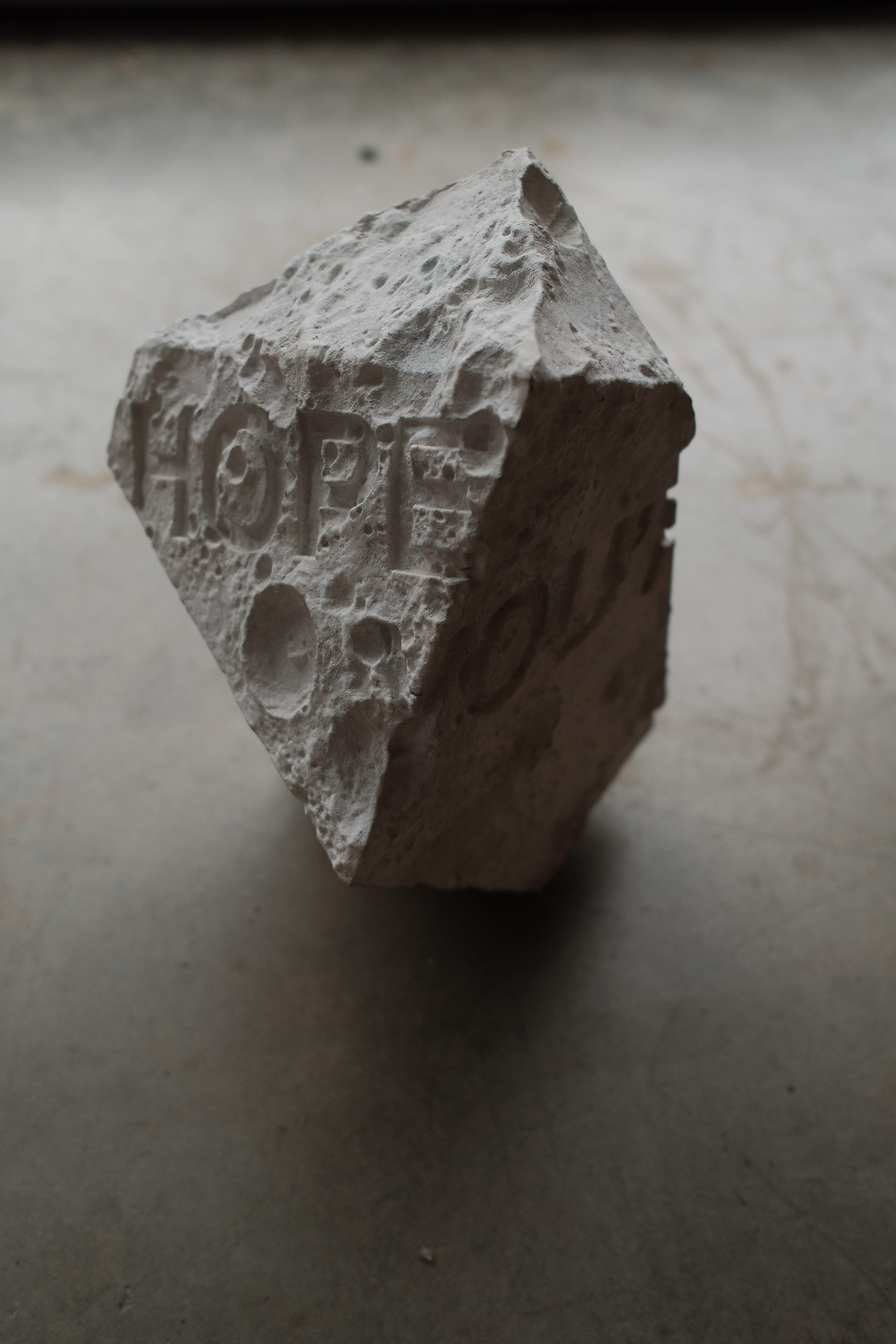
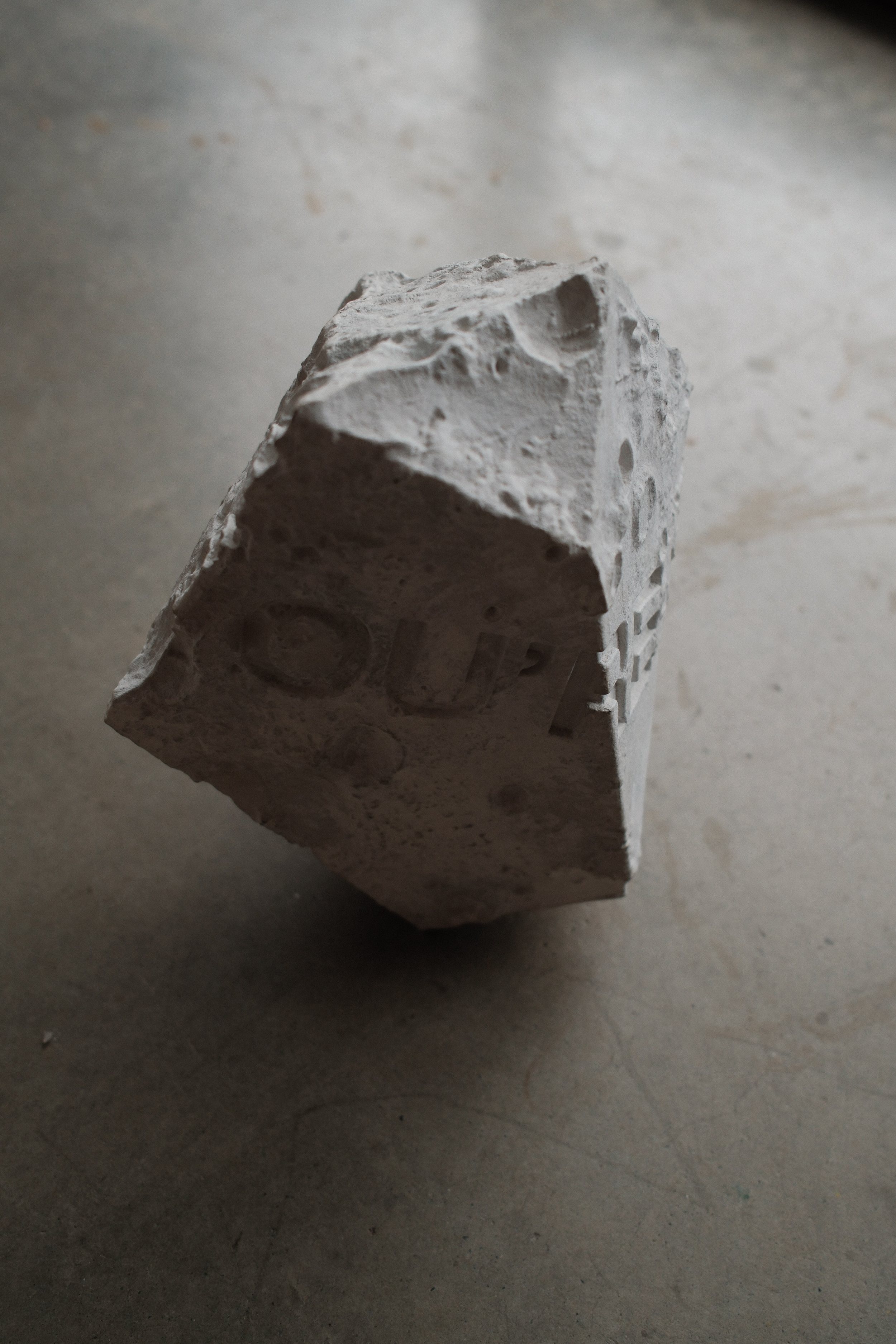
The world of the work is a grounded near future of Lunar labor, where people take long duration contracts to work on the Moon in the same way people now work at Antarctic stations, offshore oil rigs, military deployments, or remote industrial sites. These are no longer just astronauts in the heroic “right stuff” sense of fighter pilots and career NASA scientists, but more general workers: technicians, fabricators, maintenance crews, researchers, operators, contractors, and people doing jobs under extreme conditions. If lunar habitation becomes real, and the world seems to be trending that way, the human presence on the Moon will become more culturally, psychologically, and emotionally complex, than the dominant image of space exploration tends to allow.
This is where the message becomes more than text. The Moon is usually approached through hard data: maps, samples, coordinates, geology, resource surveys, mission plans, and quantified risk. Thinking of You keeps that language present through its use of LRO imagery and lunar sample aesthetics, but it also asks what else should be considered. The message is embedded into the artifact, making the emotional reality of the worker part of the sample itself and thus validating it’s presence within the current systems of analysis.
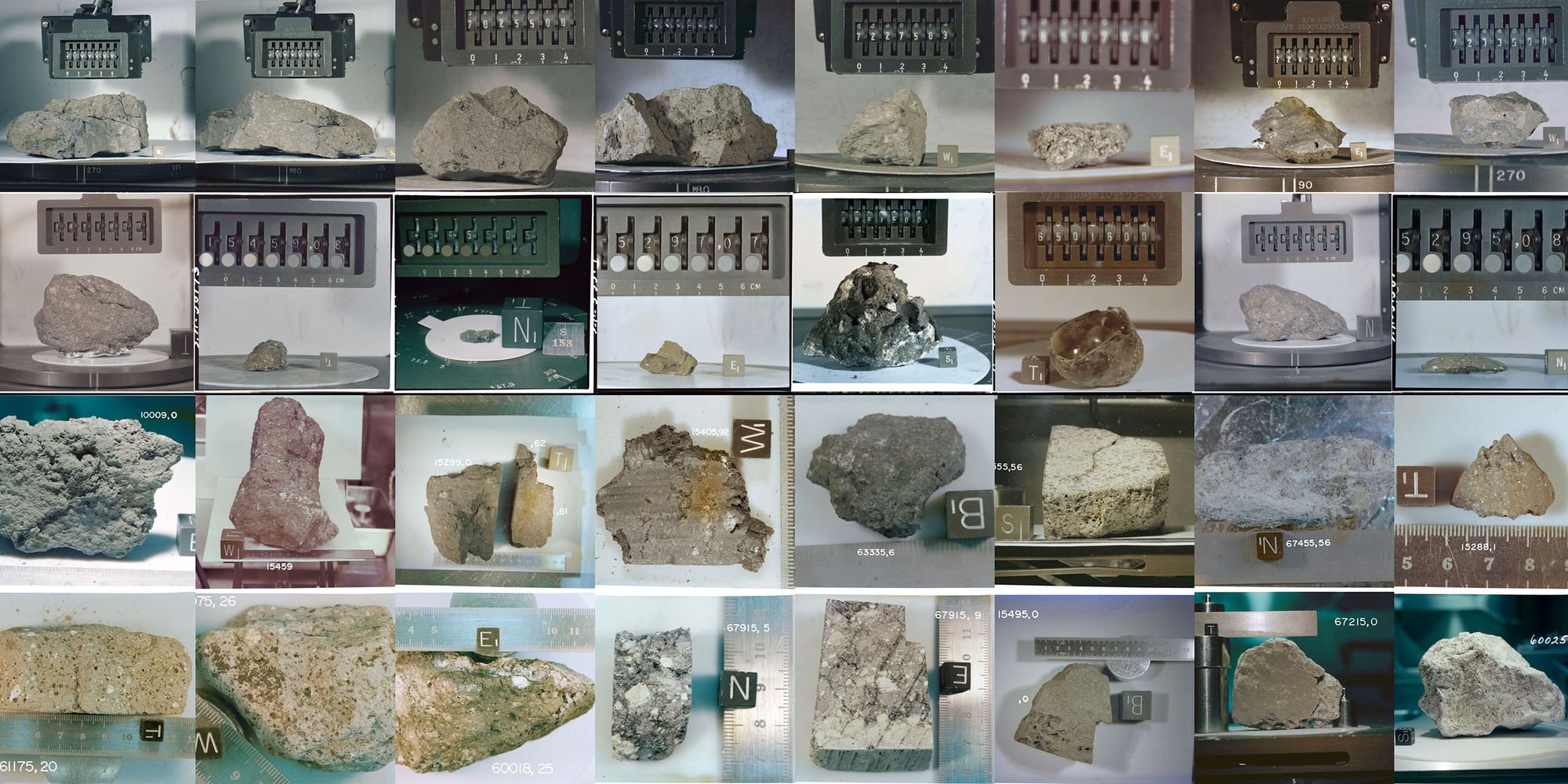
Photo collage of images from NASA's Lunar Sample Catalog meticulously recording rock samples returned from the Moon. Source: https://www.beautifulpublicdata.com/nasa-lunar-sample-collection/
The work treats longing, homesickness, boredom, ritual, intimacy, grief, and distance as soft data of lunar habitation. These human conditions and experiences are not measurements in the usual engineering sense, but they are still vital information and mission critical elements. They are hyperlocal, embodied, and specific to the person living and working inside an off-world environment. By placing the message inside the lunar object, just as aggregate inclusions of distinct minerals are found in Lunar geological samples, the piece asks what else should be understood as part of operations in the Lunar environment rather than an afterthought to the mission.
/ / / / / / / /
/ / / / / / / /