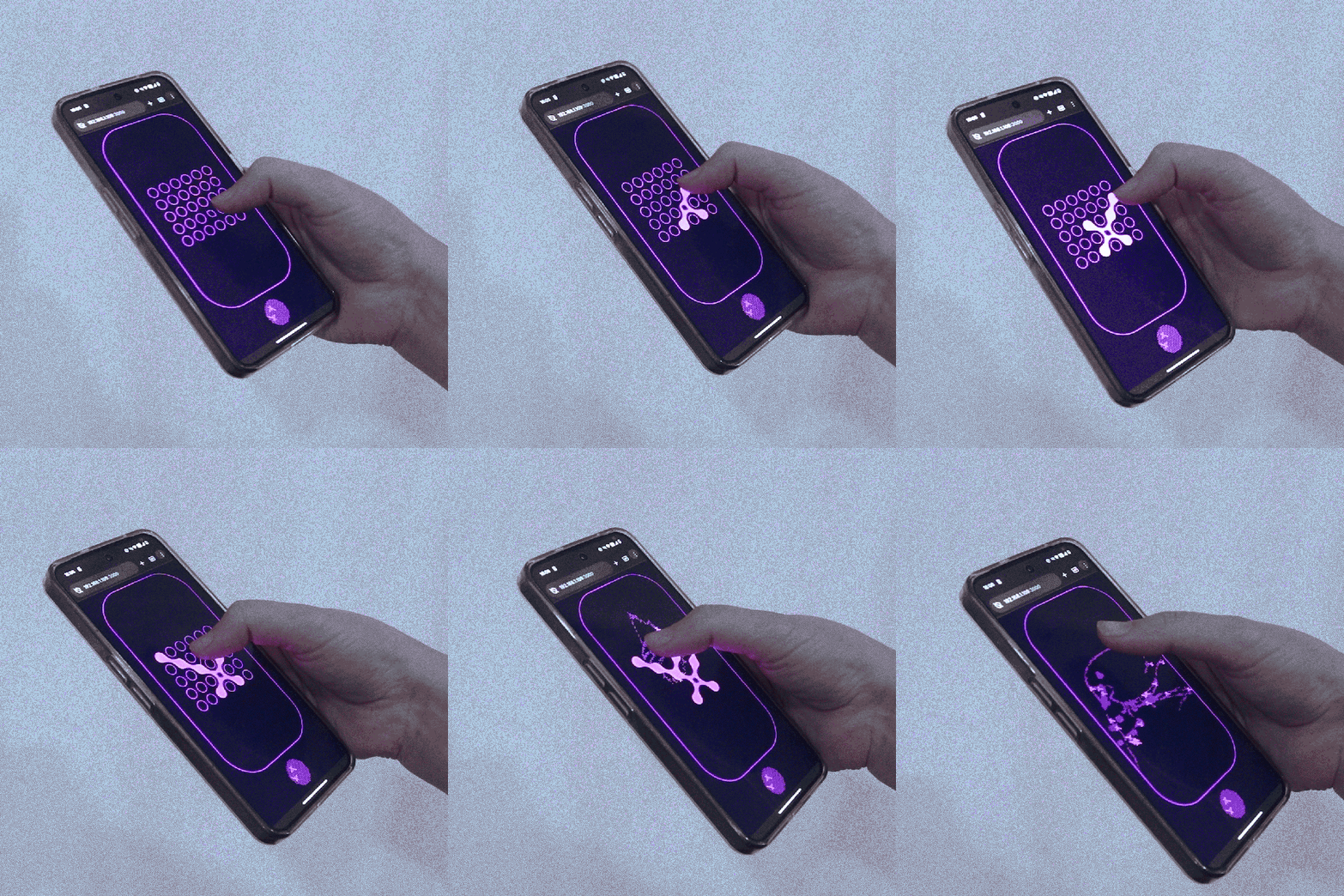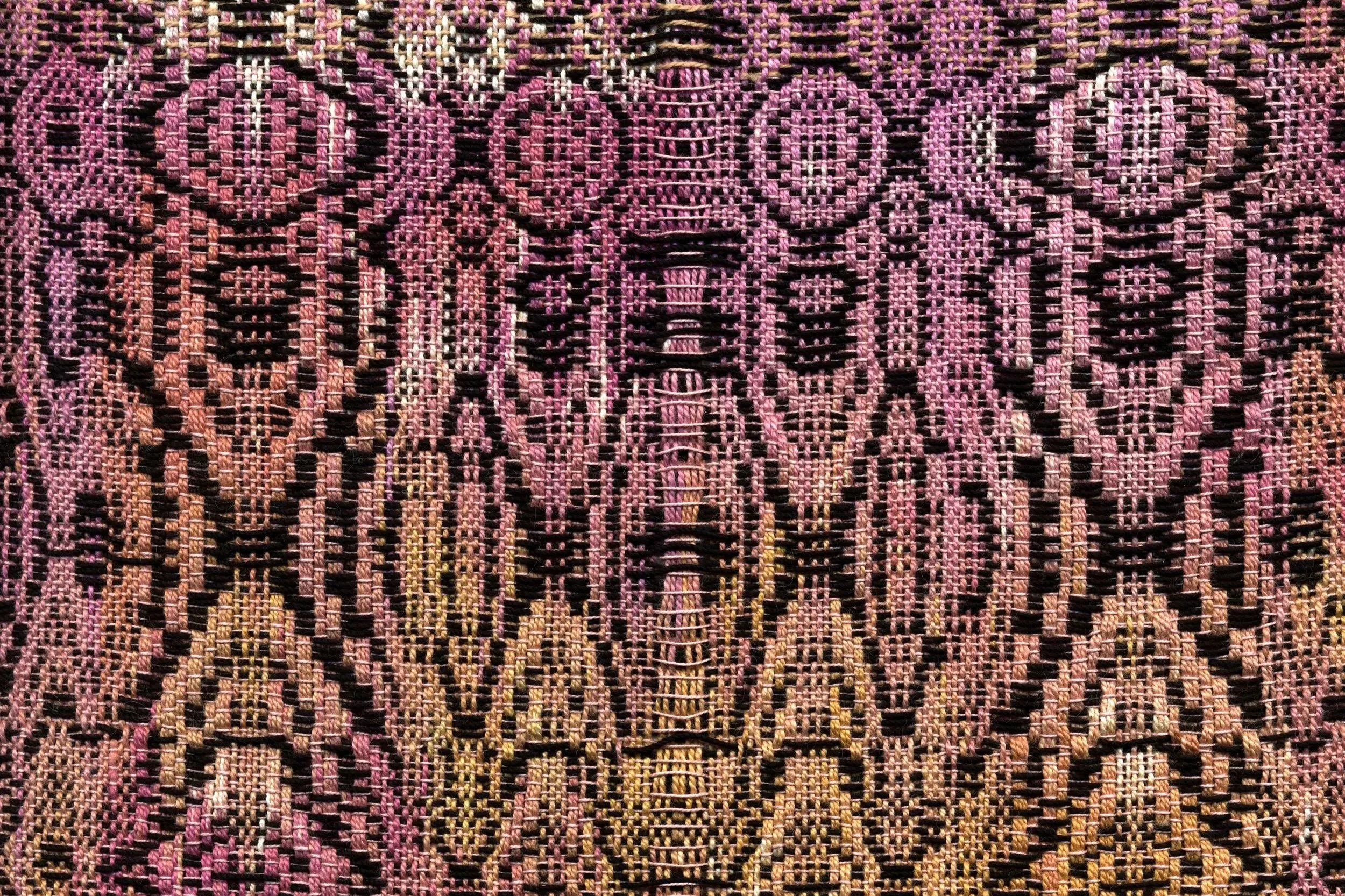
Shedding Senses by Maria Thrän
Latex, Copper, Organic material CMA Studio 2026
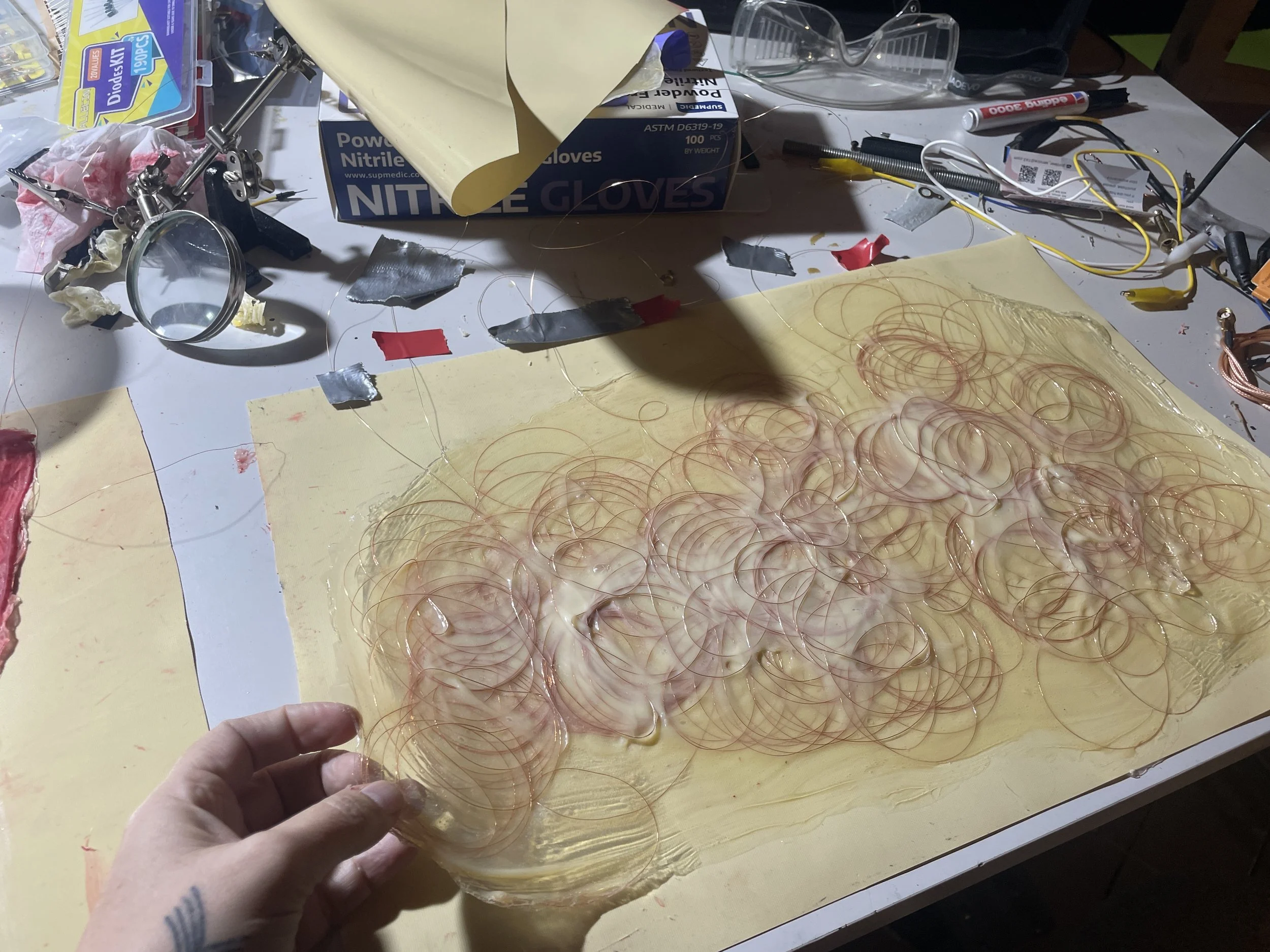
In September 2025 I began exploring latex as a soft material, implementing electronic components such as copper wire into its liquid state, testing its edges. I begin with the material intelligence of the rubber tree (Hevea brasiliensis), a technology that has never been fully achieved or synthetically reproduced by humans and has therefore been heavily extracted, especially by the Western world, for use. Working with latex is working with a material that asks for responsibility.
Stereo Loudspeaker Exploration 2025
My doctoral thesis is shaping and growing within me, in relation to this world, in dialogue with the human and the more-than-human. Sometimes through a collective ritual, through a song; sometimes in the form of a poem; sometimes in the form of materiality, such as latex.
I have always been drawn to working with latex as a material — the sense of it, the haptics, the transparency, the elasticity, the sensuality of a materiality so thin and almost skin-like, both a shield and a wound. My hands keep returning to it — first in its liquid state, then, once dried, the way it offers to be stretched, almost see-through; it feels like a strange pleasure of contact when touched and pulled over my body. The knowledge: this is the sap of a tree, a living secretion, protection and vulnerability at once.
A custom soft speaker— copper wire cast into latex, activated through a pressure sensor and modulated via Arduino. November 2025
What does it mean to create with that materiality as a white queer artist, and to approach latex not as a symbol, but within the tension of extractive histories that demand accountability? What does it mean to enter into relation with a material, to perform with it, without pretending not to extract, but staying with that tension? How can relational infrastructures reorganize exposure without eliminating tension?
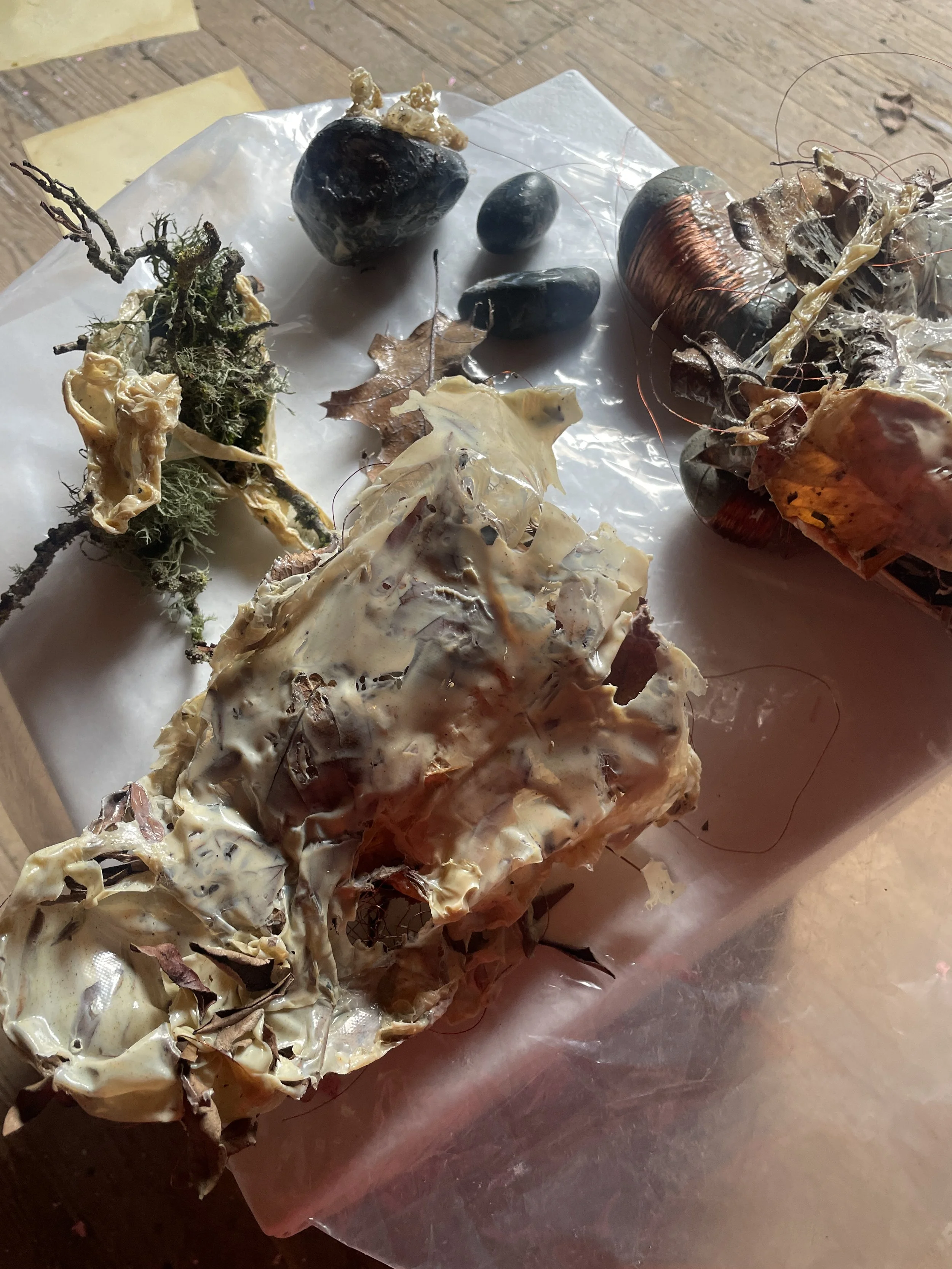
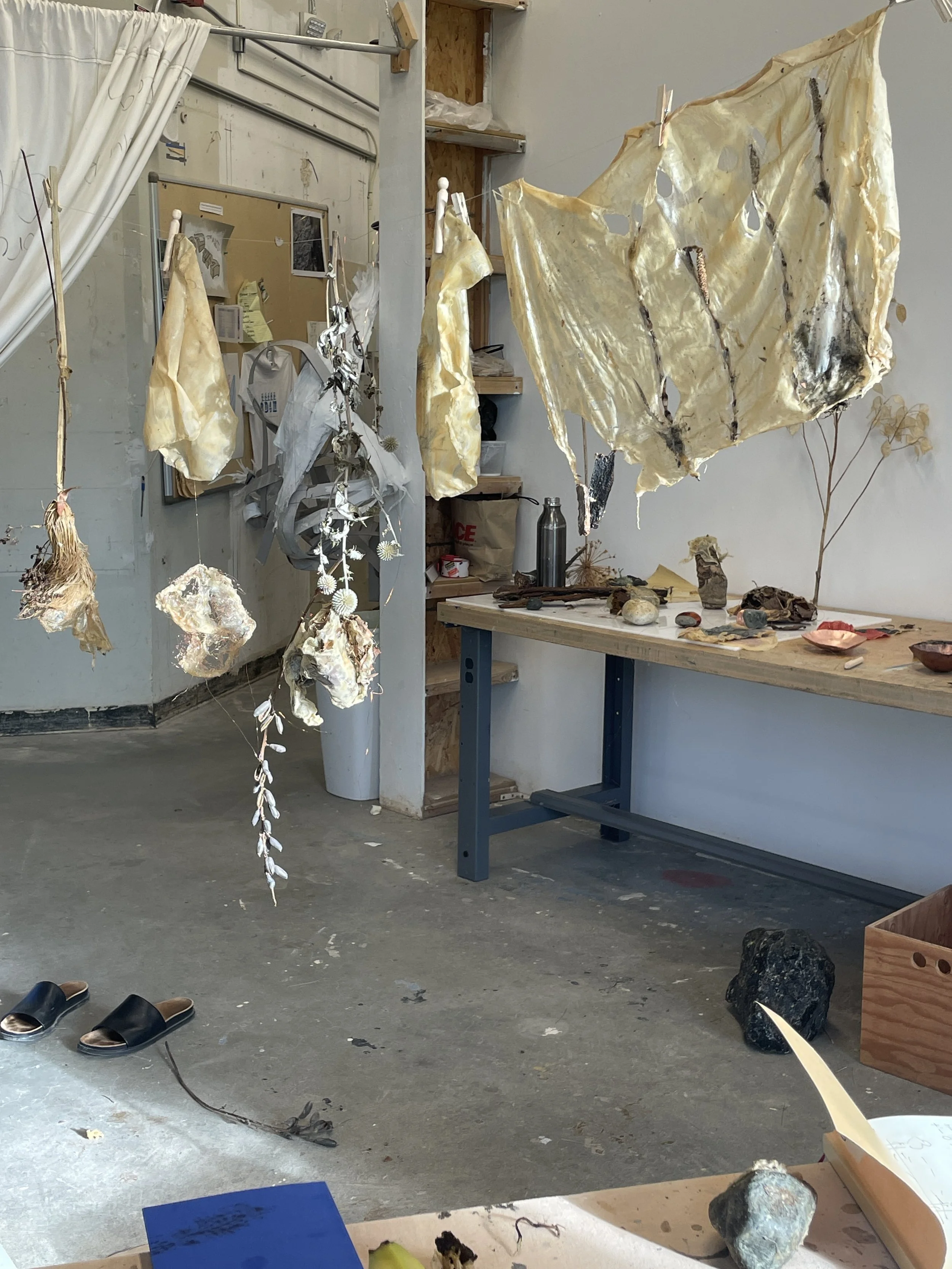
Latex, Leaves, Copper Wire 2026
This research is part of my ongoing doctoral work, in which I develop a multi-sensing system — to transmit and receive, soft speakers, antennas, and sculptures. I am moving across questions of care and wrapping, thinking about what is actually technology — moving here along material intelligence, and questioning what role my voice plays within this.
This is a beginning, a way of thinking through a performance series I developed with latex and through small rituals. I staged them in the wetlands of Seattle to question my relation to non-human entities, to my own body, and to its gaze.
Performance 2026, in the wetland— excerpt. Part of the work and progress presentation, DXARTS Gallery
Latex darkens, curls, cracks, and gradually sheds; graphite drifts and fractures; coils interfere unpredictably. Instead of stabilizing these behaviors, they define the aesthetic and conceptual direction. The materials themselves produce the sonic and visual language: soft vibration, internal brightness, noisy modulation, fragile resonance.
Shedding Senses emerged from that tension; it became a way of asking whether care can operate not as consolation, repair, or innocence, but as interference — a mode of staying with exposure, accountability, and embodied relation without resolving them too quickly.
Within that research I am asking, with Raven Chacon: Who gets amplified, who remains unheard, and who is silenced in this world? In the long-term project, these membranes, sensors, antennas, and light components will enter into dialogue with environmental forces such as stone, barks and other non humans.
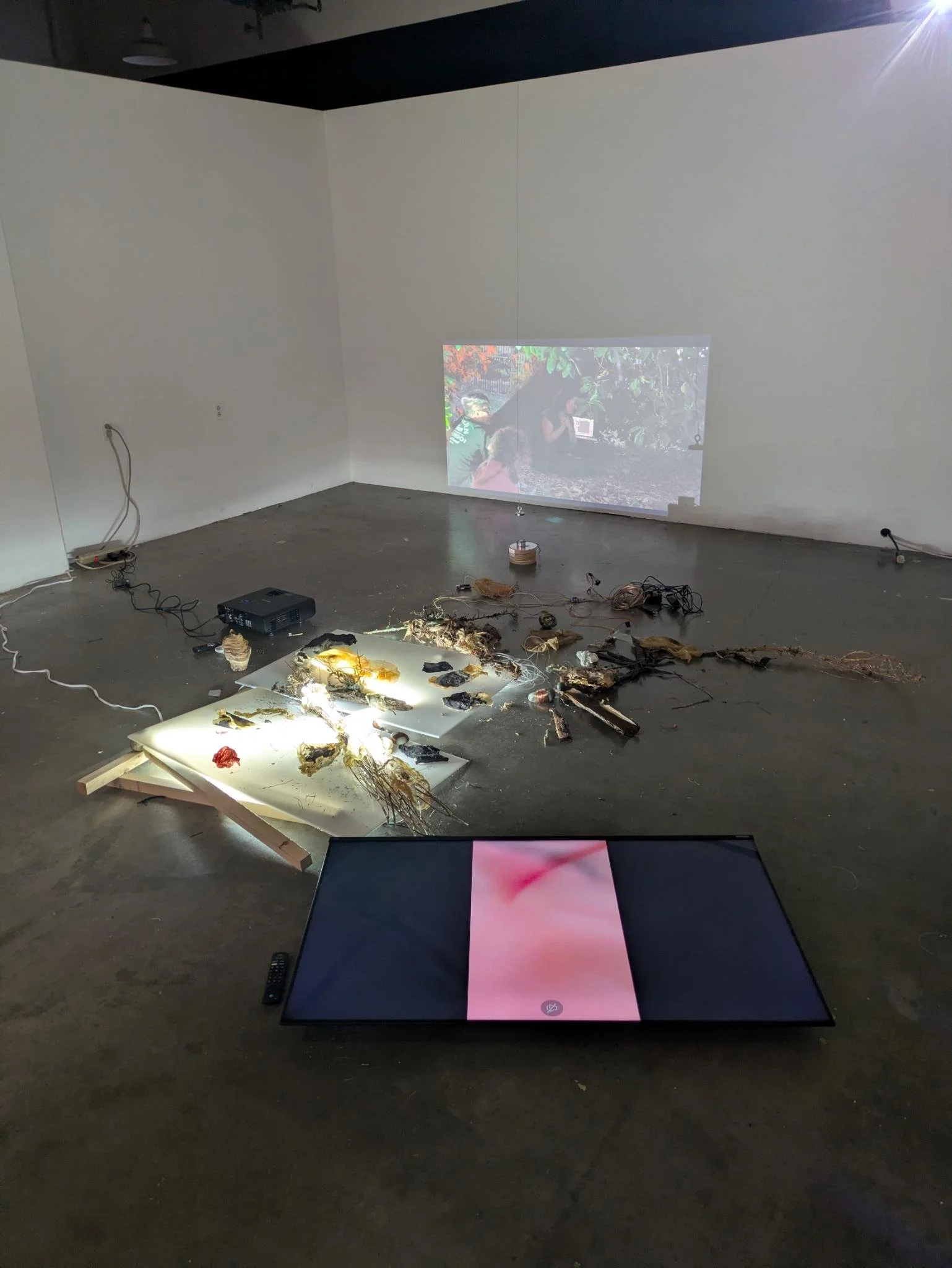
DXARTS Gallery February, 2026. Work in progress exhibition. Latex, electronics, video, neon light